
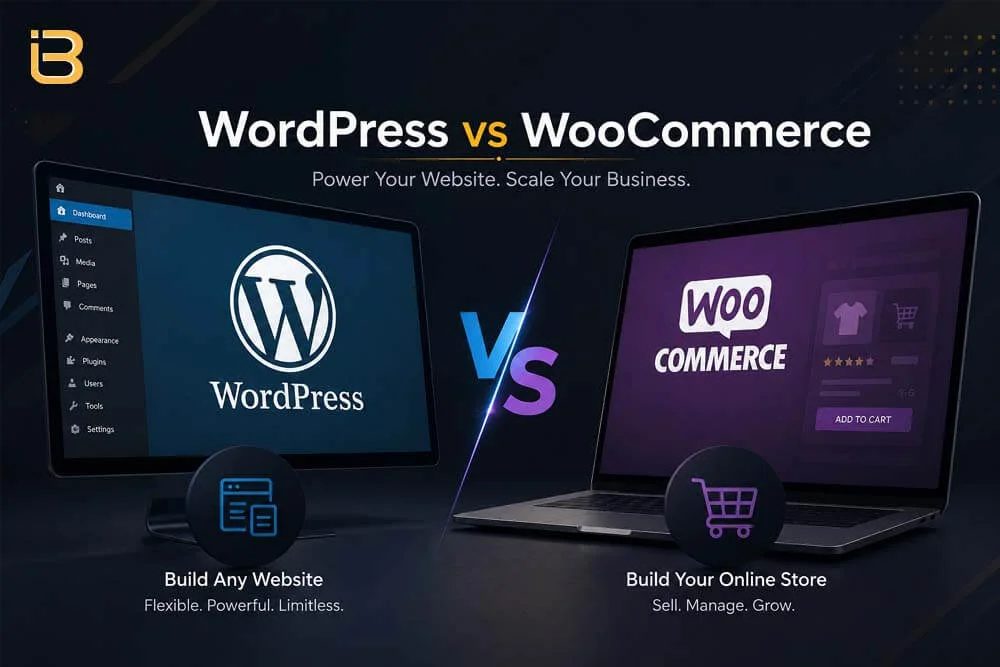
WordPress (specifically WordPress.org) is an open source Content Management System (CMS). Launched in 2003 as a simple blogging tool, it has evolved into the power engine behind over 40% of all websites globally.
WooCommerce is not an independent CMS. Instead, it is an open source e-commerce plugin built specifically for WordPress.
Launched in 2011, WooCommerce transforms a standard WordPress site into a fully functional online store. It enables you to list products, manage inventory, calculate shipping, process secure payments, and manage customer orders seamlessly.
The main distinction lies in their purpose. Think of WordPress as the foundation, frame, and walls of a building. WooCommerce is a specialized commercial setup like a retail storefront that you place inside that building.
| Feature | WordPress | WooCommerce |
|---|---|---|
| Primary Role | Content Management System (CMS) | E-commerce Engine / Plugin |
| Standalone Use | Yes, operates independently | No, requires WordPress to run |
| Primary Focus | Blogs, corporate sites, portfolios | Product sales, store management, cart/checkout |
| Setup Complexity | Very Low to Moderate | Moderate to Advanced (due to payments & shipping) |
| Core Functionality | Pages, posts, categories, media | Products, shopping cart, checkout, payment gateways |
Setting up a standard WordPress site is straightforward. Most web hosting providers offer one click installations. Within minutes, you can log into your admin dashboard, choose a visual design, and start publishing content.
Both platforms excel in design flexibility. WordPress offers thousands of free and premium themes that control your site’s overall appearance. You can customize pages visually using popular drag-and-drop page builders.
Search engine visibility is a major strength for both options. Core WordPress is inherently built with clean code and URL structures that search engines love. Powerful plugins like Yoast SEO or Rank Math help you optimize meta descriptions, titles, and schema markup effortlessly.
WooCommerce builds upon this strong SEO foundation by extending optimization options to product pages. You can optimize product descriptions, add structured product schema (prices, ratings, stock status), and organize categories to rank for lucrative buyer-intent keywords.
Essential WordPress Costs:
Additional WooCommerce Expenses:
Pros:
Cons:
Pros:
Cons:
For marketing agencies looking to expand their service offerings without overhead costs, partnering with a white label WordPress website development agency provides access to expert developers who deliver pixel-perfect, SEO optimized web solutions under your brand name.