
HIPAA Compliance Guide for Dental Web Development

Building a modern dental website feels exciting, but it also brings heavy legal responsibilities. When patients schedule cleanings, fill out intake forms, or ask questions online, they share sensitive health data. Because of this, protecting digital patient records is not just smart business; it is a legal requirement. Dental practices and digital agencies must navigate strict federal rules to keep online platforms secure.
HIPAA Compliance Guide for Dental Web Development
Understanding these regulations can seem overwhelming at first glance. However, breaking down the requirements makes the process much more manageable. Whether you manage a single dental clinic or run an agency building dozens of sites, getting compliance right protects everyone involved. Let us explore how to build secure, high-performing dental websites while keeping patient data completely safe.

Understanding the Core Basics of Dental Data Privacy

Before diving into complex technical details, we need to look at what constitutes protected health information online. Digital touchpoints like contact forms, appointment booking widgets, and patient portals frequently handle names, phone numbers, medical histories, and insurance details. Because these elements touch personal health data, they fall directly under federal privacy regulations.
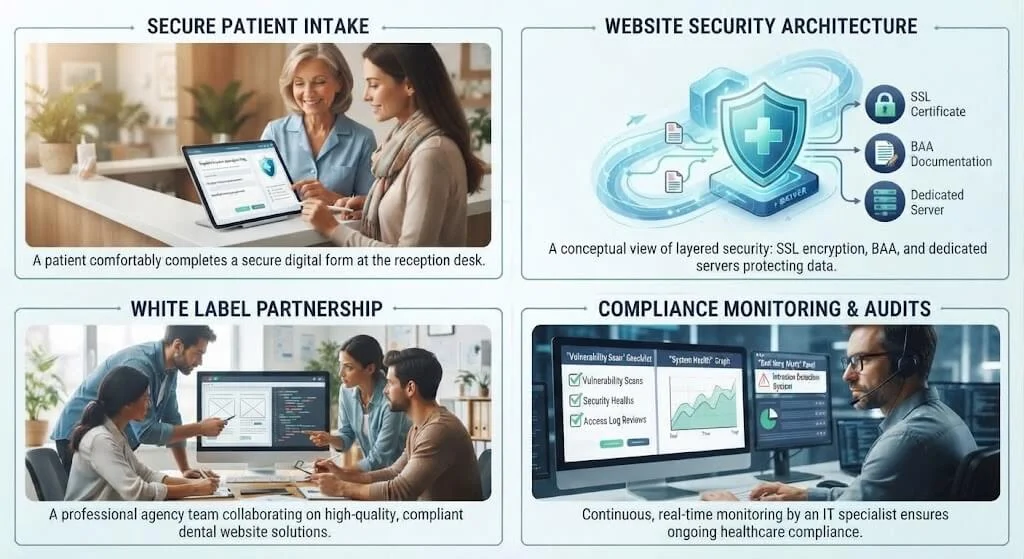
Failing to secure these digital entry points can lead to severe financial penalties and reputational damage. Consequently, every piece of data transmitted through a dental website must remain encrypted both in transit and at rest. Furthermore, staff access must be strictly limited, and proper auditing tools must be put in place to monitor who views or handles patient submissions.

Key Elements of a Secure Dental Website Architecture

Creating a secure digital foundation requires careful planning and robust technology choices. Standard hosting environments often lack the strict security measures required for healthcare websites. Instead, practices need specialized hosting providers that willingly sign a Business Associate Agreement (BAA) and offer dedicated server security.

Moreover, every form submission must use secure protocols. Instead of sending raw patient data through unsecured standard emails, developers should route form submissions directly into encrypted databases or secure portals. Additionally, implementing strict user authentication methods prevents unauthorized individuals from accessing the backend of the website.

Encryption Protocols and SSL Certificates

Securing data transmission is the absolute first line of defense for any healthcare platform. A standard SSL certificate is no longer optional it is mandatory for encrypting information moving between the browser and the web server. Furthermore, database encryption ensures that even if unauthorized actors breach the server, the stored patient records remain completely unreadable.

Secure Form Handling and Patient Portals

Contact and intake forms are notorious vulnerabilities on healthcare sites. Standard plugins often store form entries insecurely in local website databases. To maintain compliance, developers must configure forms to use HIPAA-compliant plugins or integrate directly with secure third-party patient management software. This ensures that personal health information never sits unprotected on a public-facing web server.

Partnering for Success with White Label Web Partners

Building secure healthcare platforms requires specialized knowledge that many standard in-house teams simply do not possess. Digital agencies often find themselves stretched thin when trying to meet strict regulatory demands while keeping up with tight client deadlines. Fortunately, collaborating with specialized White Label Web Partners provides a seamless solution to this challenge.

These dedicated backend partners work completely behind the scenes, allowing creative agencies to offer secure, compliant websites without hiring costly full time specialists. By leveraging expert developers who already understand healthcare security requirements, agencies can scale their operations efficiently. Ultimately, this partnership model ensures that every dental client receives a top-tier, legally compliant website without agency burnout.

Scaling Agency Offerings Without Extra Overhead

Growing a digital agency takes immense effort, particularly when expanding into niche healthcare markets. Instead of scrambling to train existing staff on complex compliance protocols, agencies can rely on white label experts. Consequently, project delivery speeds increase, code quality remains consistently high, and profit margins stay protected.

Seamless Integration and Brand Consistency

A common concern with outsourcing development is maintaining brand integrity. However, professional white label teams operate under strict white-label agreements, meaning they remain entirely invisible to the end client. They build custom themes, write clean code, and ensure every element aligns perfectly with the primary agency’s branding and quality standards.

Best Practices for Ongoing Maintenance and Audits

Launching a secure website is only the beginning of the journey. Cyber threats evolve constantly, and software vulnerabilities emerge regularly. Therefore, maintaining compliance requires continuous monitoring, routine security patches, and periodic vulnerability scans.
Additionally, dental practices must keep detailed access logs and review them regularly. If a plugin updates or a server setting changes, it can unintentionally expose sensitive database fields. Regular maintenance routines prevent these accidental security gaps and ensure long-term protection for both the clinic and its patients.

FAQs

What makes a dental website HIPAA compliant?
A dental website becomes compliant when all digital touchpoints handling personal health data such as contact forms, patient portals, and booking widgets are fully encrypted, hosted on secure servers with signed Business Associate Agreements, and protected against unauthorized access.
White-label partners provide specialized technical expertise in healthcare compliance, allowing digital agencies to deliver secure, custom websites for dental clients quickly and efficiently without expanding their internal staff.
Most standard WordPress plugins store form submissions unencrypted in the local database, which violates security standards. Dental websites require specialized plugins or direct integrations with encrypted, compliant third-party databases.
Encryption scrambles data while it moves across the internet and while it is stored on servers. This ensures that even if data is intercepted, it cannot be read or used by unauthorized individuals.
Yes, continuous maintenance is critical. Regular software updates, security patches, and vulnerability scans ensure that new web threats do not create accidental compliance gaps over time.