

Online visitors treat slow websites the exact same way. When a patient searches for a local dentist on a mobile phone, every single second of loading delay feels like a closed door. Fortunately, understanding Dental website speed optimization changes everything for modern practices. While many clinics pour thousands of dollars into flashy graphic design or expensive ad campaigns, they often overlook the technical backbone of their web presence. However, fixing performance issues creates a frictionless experience that immediately converts casual visitors into confirmed appointments.
People looking for dental care are rarely browsing for fun. Usually, they are dealing with a sharp toothache, looking for a routine cleaning before insurance rolls over, or trying to find a cosmetic solution for an upcoming wedding. Because their intent is urgent or highly specific, their attention span online is remarkably short.
When a page takes four or five seconds to load on a smartphone, frustration sets in instantly. Psychological studies on user behavior show that bounce rates skyrocket the moment a site lags. Instead of waiting around for high resolution smile galleries to crawl onto their screens, potential patients simply hit the back button. Consequently, all the marketing budget spent driving traffic to that page goes completely to waste.
Speed does more than just keep people happy it acts as an unspoken indicator of trust. Think about it from a consumer perspective. If a dental clinic’s website is clunky, disorganized, and painfully slow, your subconscious mind assumes things about their actual office. People often equate digital competence with clinical competence.
Furthermore, search engines heavily favor fast loading speeds. When a site responds instantly, users stay longer, click on multiple pages, and actually fill out contact forms or booking widgets. On the other hand, sluggish performance tanks your conversion metrics. Even if your dental team is exceptionally friendly and your facility is state of the art, a slow website acts as an invisible barrier keeping new patients out of your waiting room.
Many dental websites start out looking great, but over time, they bog down under the weight of unoptimized plugins, massive image files, and bloated themes. Dentists love showcasing high definition before and after photos of smile makeovers. Unfortunately, uploading raw, multi-megabyte images straight from a camera or smartphone brings any server to its knees.
Additionally, older hosting environments and poorly configured content management systems add extra server response time. Every extra script, tracking pixel, and uncompressed stylesheet forces the browser to jump through hoops before the booking button ever becomes visible. This is where meticulous technical execution makes all the difference. While local practices focus on patient care, optimizing these under the hood elements usually requires specialized backend support. Many growing agencies and dental practices rely on professional white label wordpress development teams to clean up codebases, streamline database queries, and achieve lightning-fast loading benchmarks without disrupting daily operations.
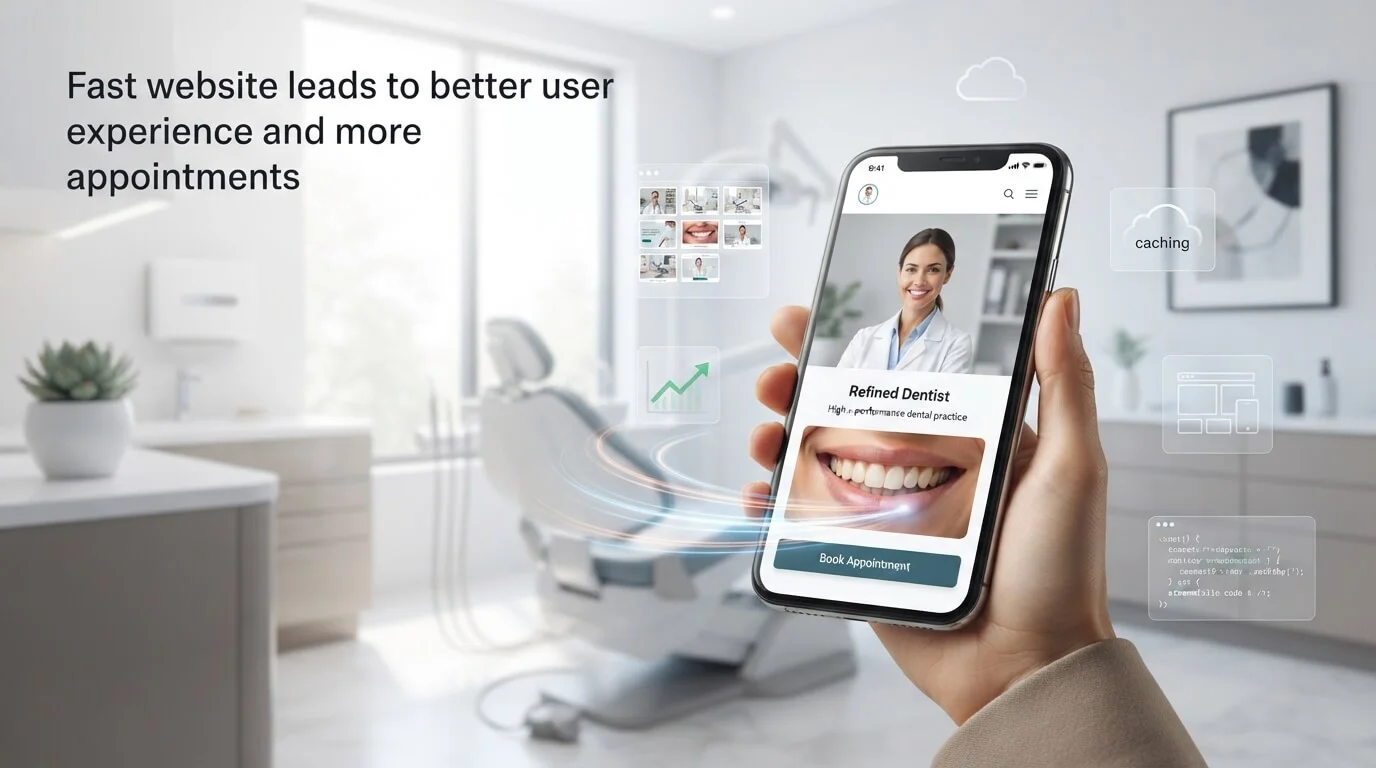
High resolution images remain essential for dental marketing, but teams must optimize them properly. Transitioning to next-gen formats like WebP and ensuring every photo undergoes compression before upload prevents massive bandwidth drains.
Therefore, your mobile user experience must be immaculate. If buttons are too small to tap, text requires horizontal scrolling, or booking forms break on smaller screens, users will leave. Responsive design ensures that every element scales gracefully across devices. Moreover, Google indexes sites primarily through mobile first indexing, meaning your mobile speed score directly dictates your visibility on search engine results pages.
It is easy to view website optimization as an abstract IT expense rather than a revenue driver. However, the math tells a different story. If your dental clinic receives 2,000 unique visitors a month and your current booking conversion rate sits at a modest 1.5%, you gain 30 new patients.
Once your technical performance is locked in, the overall user experience naturally falls into place. When a prospective patient lands on your mobile site and sees an instantly responsive schedule widget, booking an appointment feels effortless. Clear call to action buttons, intuitive navigation menus, and swift page transitions work together to guide the user smoothly from their initial search query straight to the booking confirmation screen. Ultimately, a fast website respects the user’s time, establishing immediate credibility and driving steady practice growth.